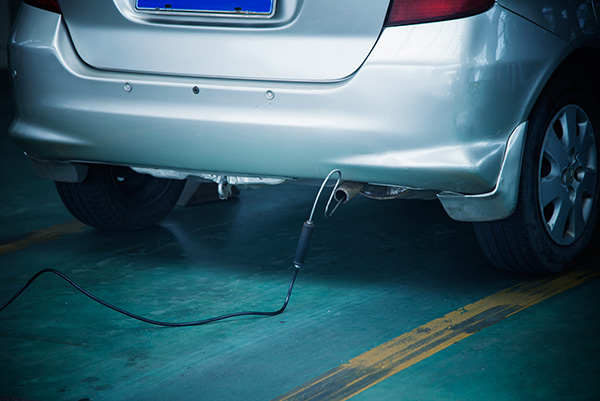
A failed emission test can feel like getting tripped up by paperwork, but the report is usually pointing to a mechanical issue. You expect a pass, then you get handed numbers, codes, or a readiness note that doesn't explain itself very well.
The car may still feel normal.
That is what makes emissions problems frustrating. Many engine issues show up in the exhaust before they show up as rough running, stalling, or poor power. The test is not only checking the tailpipe output. It is giving you a clue about how cleanly the engine is burning fuel.
Why Emissions Failures Point Back To The Engine
Your engine has to burn the right mix of air and fuel. If that mix is off, the exhaust changes. Too much fuel, not enough air, a weak spark, low engine temperature, or incorrect sensor readings can all result in emissions levels that prevent the vehicle from passing.
A failed test can also indicate that the car’s onboard monitors are not ready or that the check engine light is on. Modern vehicles monitor themselves closely, and if the computer detects an emissions-related fault, the test station will see it too.
The result is simple. A failed test is often the car reporting that the engine is not operating within its normal range.
Misfires Can Raise Emissions Fast
A misfire means one cylinder is not burning fuel correctly. A worn spark plug, a weak ignition coil, a fuel injector issue, a vacuum leak, or a compression problem might cause it. Sometimes the driver feels a shake. Sometimes the misfire is small enough that the car still seems fine.
When fuel does not burn, it does not vanish. It moves down the exhaust stream, and the catalytic converter has to deal with the extra heat and fuel load. A flashing check engine light means the misfire is happening right now, so driving normally can get expensive quickly.
Even a minor misfire can be enough to fail an emissions test if it happens often enough.
Fuel Mixture Problems Show Up In The Exhaust
Engines are picky about the balance of air and fuel. If the engine runs too rich, it is using too much fuel. If it runs too lean, it has too much air or not enough fuel. Either condition can affect emissions.
Rich usually means the engine is getting more fuel than it can burn cleanly. A leaking injector, fuel pressure problem, restricted air intake, or inaccurate sensor input can push it that way. Lean is the opposite problem. Extra air from a vacuum leak, a cracked intake boot, a weak fuel pump, or an unmetered air leak can cause the engine to run short on fuel.
These problems can hide well. You might only notice lower fuel economy, a light hesitation, or a faint fuel smell. The emissions test may catch the problem before your daily drive makes it obvious.
Oxygen Sensors And Catalytic Converter Clues
Oxygen sensors help the computer adjust fuel delivery by measuring the composition of exhaust gases. When a sensor becomes slow or inaccurate, the computer may make incorrect corrections. That can raise emissions and trigger a check engine light.
The catalytic converter is also a common component of emissions control. It cleans up exhaust after combustion. If it is damaged, contaminated, or no longer efficient, the vehicle may fail. But the converter is not always the original problem.
We see converters damaged by misfires, oil burning, rich fuel mixtures, and exhaust leaks. Replacing the converter without checking what stressed it is how the same failure comes back later.
Temperature Problems Can Affect The Test
An engine needs to reach the right operating temperature. If the thermostat sticks open, the engine may run too cool. That can hurt fuel economy, increase emissions, and keep the computer from completing certain readiness checks.
A coolant temperature sensor can throw the fuel strategy off, too. If it tells the computer the engine is colder or hotter than it really is, the computer can add the wrong amount of fuel. The driver may only notice poor mileage, a slight change in how the car runs, or a check engine light that keeps returning.
This is where regular maintenance helps. Thermostats, coolant condition, air filters, spark plugs, and small leaks all affect how cleanly the engine runs.
Readiness Monitors And Recent Code Clearing
Sometimes a car fails because the readiness monitors are not complete. That often happens after the battery has been disconnected or codes have been cleared recently. The computer needs enough normal driving to run its self-tests again.
Clearing codes right before an emissions test rarely helps. The light may be off, but the monitors may still show “not ready”. Worse, the useful data that could have helped track the fault is gone.
A proper inspection looks at stored codes, pending codes, live data, fuel trims, misfire counters, sensor readings, and readiness status. The goal is to find why the vehicle failed, not just reset the light and hope it stays away.
Get Emission Test Diagnostics In Burnt Hills, NY, With Gil's Garage Inc
If your car fails an emissions test, Gil's Garage Inc in Burnt Hills, NY, can check the engine data, emissions systems, and related parts to identify the true cause.
Schedule a visit and get a clear repair plan before retesting.