If you’ve ever opened your hood after a long summer drive, you know the feeling of that wall of heat hitting your face. It’s intense. While we usually worry about our coolant levels or our oil during the hotter months, there is a silent victim of that high-temperature environment that often goes overlooked until it’s too late: your drive belts.
At our shop, we see a huge spike in belt-related failures as the temperature climbs. But it isn't just the weather outside that’s the culprit, but it’s the constant cycle of heating up and cooling down that happens every single time you turn the key. If you've ever wondered if heat actually makes your belts more brittle, the answer is a resounding yes.
The Belt Breakdown: What’s Under the Hood?
Before we talk about the why, let’s clarify what we’re looking at. Most modern vehicles rely on one of two main types of belts to keep things moving.
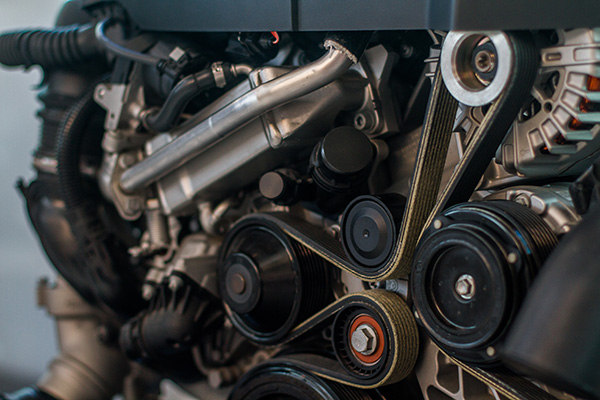
- The Serpentine Belt (Drive Belt): This is the long, winding belt you see at the front of your engine. It’s the multi-tasker of the group. It snakes around various pulleys to power your alternator, power steering pump, air conditioning compressor, and sometimes the water pump. If this snaps, you’re losing power steering and your battery will stop charging immediately.
- The Timing Belt: This one is usually hidden behind a plastic cover. It’s arguably the most critical belt in the entire machine because it synchronizes the rotation of the crankshaft and the camshaft. If this belt gets brittle and snaps, the internal parts of your engine can literally collide, leading to a repair bill that might make you want to cry.
Most of these belts are made of high-quality synthetic rubber, specifically a material called EPDM (Ethylene Propylene Diene Monomer). It’s designed to be durable, but even the best rubber has a shelf life.
The Science of Brittle Belts
Rubber is essentially a collection of long polymer chains. When a belt is new, these chains are flexible and elastic, allowing the belt to grip pulleys and bend around tight corners thousands of times per minute.
However, heat acts as a catalyst for a process called thermal degradation. As the belt stays hot for extended periods, the oils and plasticizers that keep the rubber supple begin to evaporate or break down. Once those elements are gone, the rubber becomes stiff.
Think of it like an old rubber band you found in the back of a drawer. When you try to stretch it, it doesn’t give and may snap or show tiny cracks. That is exactly what happens to your serpentine belt. When it loses its elasticity, it can no longer grab the pulleys efficiently, leading to slipping, squealing, and eventually, a total break.
Signs Your Belts Are Worn
You don’t have to be a master mechanic to spot a belt that’s on its last legs. Here is what we look for during a standard inspection:
- Glazing: If the underside of the belt looks shiny, it has been exposed to extreme heat and has likely started to harden.
- Fraying: If you see threads or hair-like fibers coming off the edges, the internal structure is starting to fail.
- Cracking: Look for small, horizontal cracks along the ribs of the belt. If you see more than three or four cracks within an inch of the belt, it’s a ticking time bomb.
- Chirping: A rhythmic chirping or squealing sound, especially when you first start the car or turn the steering wheel, is often a sign that a hardened belt is slipping.
Why Prevention Beats the Alternative
The toughest part about a brittle belt is that it rarely gives you a convenient time to fail. It usually happens when the engine is under the most stress, like when you’re accelerating onto a highway or idling in heavy traffic on a hot day.
Replacing a serpentine belt is a relatively quick and affordable piece of preventative maintenance. On the other hand, waiting for it to snap can result in a tow truck fee, lost time, and the potential for your engine to overheat because the water pump stopped turning.
Belt Inspection at Gil's Garage Inc
We know that out of sight, out of mind is a real thing when it comes to car parts hidden under a hood. That’s why we make it a point to check the tension and condition of your drive belts during every oil change.
If you haven’t had your belts inspected in the last 60,000 to 90,000 miles, or if you’re starting to hear a suspicious squeak when you turn on your A/C, bring it by Gil's Garage Inc in Burnt Hills, NY. We’ll give your belts a thorough look and make sure they’re ready to handle the heat.