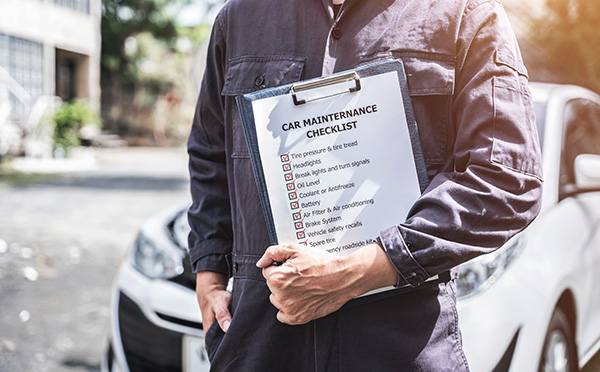
The oil was changed recently, and no service message is showing. That can feel like proof that maintenance is up to date. Yet the car may have other tasks due by time, mileage, or operating conditions that the oil reminder does not cover.
A useful maintenance review compares the manufacturer's requirements with records of work actually completed. It does not assume that every service is overdue, and it does not treat one recent appointment as a complete history. If you are unsure where the car stands, a careful review can establish the next steps without guessing.
Use the Correct Maintenance Schedule for the Car
Start with the model, year, engine, and equipment. Different powertrains can have different oil, spark plug, fluid, or driveline requirements, even within the same model family. The schedule for a similar car is not automatically the right one for yours.
Look at time limits as well as mileage. A vehicle used sparingly may still reach a service deadline. Also check the operating conditions that change the manufacturer's requirements, such as frequent short trips or demanding use. This gives the review a clear standard instead of relying on a general list of services sold at a particular mileage.
Maintenance Invoices Show What Was Actually Done
Read the service description rather than only the date on the receipt. An inspection, a top-off, and a fluid replacement are different operations. Likewise, a recommendation on an invoice does not prove the work was approved and completed.
Gather records from every shop that has serviced the car. They can show the mileage, parts, fluids, and work performed, along with unresolved findings. If a description is unclear, ask for clarification. The next technician needs to know whether a task was completed, not simply that the vehicle visited a shop around the expected time.
Oil Reminders Do Not Cover Every Maintenance Item
Oil-life systems and stickers provide useful information about an oil service, but their scope varies. Some vehicles display several service needs; others have reminders tied to only particular tasks. Resetting a reminder also does not prove every related service was performed.
Compare the reminder with the maintenance information and records. Brake fluid, coolant, filters, spark plugs, and driveline services may follow different requirements. Adding oil between changes or topping off coolant is not the same as replacing those fluids on schedule. Keep the completed service date and mileage as the starting point for the next applicable interval.
Time-Based Maintenance Can Be Overdue at Low Mileage
Fluids and some components age during ownership as well as through distance traveled. A vehicle that sits for long periods can also develop battery, tire, or other concerns without reaching a large odometer number. Low annual mileage does not remove every service requirement.
For Burnt Hills drivers who use a car mainly for local errands, the elapsed-time part of the schedule deserves attention. Frequent short trips can affect the operating conditions too. Review what the manufacturer specifies for that use rather than extending every interval because the total miles look modest.
Timing and Driveline Maintenance Need Model-Specific Checks
Some engines use a timing belt with a specified replacement interval; others use a different arrangement. A quiet engine does not mean you can postpone a scheduled timing-belt replacement. The requirement depends on the exact engine and its history.
Transmission, differential, and transfer-case services also vary. A vehicle does not need every possible driveline service merely because it has all-wheel drive, but equipment-specific tasks should not be omitted. Identify what is fitted and which records exist. A general “major service” description may need more detail before it can be treated as proof that these tasks are current.
Maintenance Status Includes Inspections and Wear Items
Scheduled fluid changes are only part of the picture. Tires, brakes, belts, hoses, steering, and suspension need the inspections appropriate to the vehicle. A part may need attention based on condition before it reaches a routine replacement milestone.
Tell us about pressure losses, new noises, weak heat, changes in braking, or unusual starting. Those concerns may call for checks beyond the schedule. Keep confirmed faults separate from routine maintenance so each recommendation has a clear reason. A car can be current on scheduled services and still have a developing repair concern.
Use Five Questions for a Maintenance Status Review
These questions help turn scattered records into an understandable plan.
- Which schedule applies to the exact vehicle and driving conditions?
- Which required services are documented as completed?
- Which tasks are due by elapsed time even if mileage is low?
- Which records or service descriptions need clarification?
- Which current symptoms or wear findings need separate inspection?
Write down the missing information instead of filling the gaps with assumptions. If the last owner or another shop has records, obtain the relevant details where possible. Where the history cannot be established, the shop can explain appropriate checks and a reasonable service starting point.
An Unknown Maintenance History Does Not Require Every Service
Missing records create uncertainty, but they do not automatically justify replacing every fluid and component. The review should consider the manufacturer's requirements, current condition, and the information that can still be confirmed. Some work may be due; other items can be inspected or clarified first.
Ask which recommendations address a known deadline and which respond to an actual finding. Also ask what happens next after the catch-up work is completed. A clear plan helps prevent a large one-time appointment from being followed by another period where no one knows which services are due.
Keep the Maintenance Plan Current After the Review
Save invoices and record the date and mileage of completed work. Set reminders for the next requirements rather than using one generic annual appointment for every system. If your driving pattern changes, review the schedule again.
Respond to urgent warnings separately. Oil-pressure loss, overheating, serious braking changes, or suspected fuel leakage should not wait while you sort out routine records. Being up to date means understanding both scheduled care and the car's current condition, with the appropriate response to each.
Schedule a Maintenance Review in Burnt Hills, NY
Gil's Garage Inc in Burnt Hills, NY, can help you review your vehicle's service history and current needs. Bring your records and describe your usual driving so we can explain what is due and what needs checking.
Contact us to schedule a maintenance review for your car.