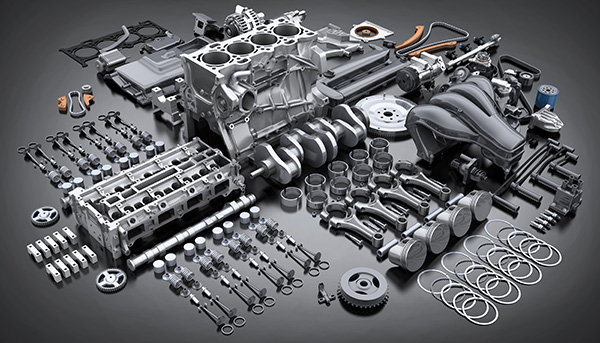
When an engine develops serious internal damage, the repair decision often comes down to two choices: rebuild the existing engine or replace it with another one. Neither option is automatically better. The right answer depends on what failed, how much of the original engine can be reused, the condition of the block and cylinder heads, parts availability, labor cost, and how long you plan to keep the vehicle.
An engine rebuild can make sense when the original engine is still a good foundation and its major castings are usable. Replacement may be more practical when damage is severe, repair parts are difficult to source, or a dependable remanufactured engine is available at a reasonable total cost.
What an Engine Rebuild Actually Involves
An engine rebuild means disassembling the engine far enough to inspect and restore its internal components. Depending on the damage, technicians may remove the engine from the vehicle, strip it down to the block, measure critical surfaces, and replace worn or damaged parts.
A full rebuild may involve pistons, rings, bearings, gaskets, seals, timing components, oil pump parts, and cylinder head work. The crankshaft and cylinder bores may need machining if wear is beyond specification. The exact repair should come from measurements rather than replacing the same standard list of parts on every engine.
A Rebuild Makes Sense When the Main Castings Are Good
The engine block and cylinder heads are expensive parts, so their condition has a major influence on the decision. If the block is not cracked and the cylinder walls can be restored within acceptable limits, rebuilding can preserve much of the original engine.
The same applies to cylinder heads. A head with worn valve guides or leaking valves may be repairable through machine work. A head that is badly cracked, warped beyond repair, or damaged around critical sealing areas can push the cost much higher.
A rebuild becomes more attractive when:
- The engine block is structurally sound
- The crankshaft can be reused or machined
- Cylinder damage is repairable
- Replacement internal parts are readily available
- The original engine is worth preserving
This is common with some performance, classic, diesel, and specialty engines where keeping the original assembly has practical or vehicle-value benefits.
High Oil Consumption Can Sometimes Lead to a Rebuild
An engine that burns large amounts of oil may have worn piston rings, cylinder wear, valve guide problems, or several issues working together. If the vehicle is otherwise in good condition, rebuilding may restore proper sealing without replacing the entire engine assembly.
Before that decision is made, technicians need to confirm why the oil is disappearing. External leaks, PCV faults, turbocharger problems, and valve stem seals can create oil consumption without requiring a complete rebuild. Compression testing, leak-down testing, oil usage history, and internal inspection help determine how far the repair really needs to go.
Bearing Damage Can Be Repairable If Caught in Time
Low oil pressure, contaminated oil, or loss of lubrication can damage crankshaft and connecting rod bearings. If the engine is stopped before a connecting rod breaks or the block is damaged, rebuilding may still be possible.
Technicians inspect the crankshaft journals, bearing surfaces, connecting rods, oil passages, and oil pump system. If the crankshaft can be machined or replaced without making the repair uneconomical, the engine may still be a good rebuild candidate. Severe metal contamination throughout the engine can make the job more complicated because every oil passage and lubricated component needs careful attention.
When Replacement Is Usually the Better Choice
Rebuilding becomes less practical when the engine has suffered major structural damage. A thrown connecting rod can break the block, while severe overheating can distort or crack several components at once. In those situations, too little of the original engine may remain usable to justify rebuilding it.
Replacement may also be preferable when:
- The block is cracked or broken
- Several cylinders are heavily damaged
- The engine suffered severe overheating
- Internal parts are difficult or expensive to source
- Machine work would exceed replacement cost
- A quality remanufactured engine has strong warranty coverage
A used engine may have a lower initial price, but its history and internal wear are not always known. A remanufactured engine generally costs more but has been rebuilt to a defined standard and usually comes with clearer warranty terms.
Cost Should Be Compared as a Complete Job
It is easy to compare the price of a rebuild kit with the price of a replacement engine and assume the cheaper number wins. That leaves out much of the real expense.
A rebuild can include engine removal, complete disassembly, cleaning, machine shop work, measurements, parts, reassembly, installation, fluids, and testing. A replacement engine may still need labor, hoses, mounts, belts, spark plugs, cooling system parts, programming, or other items before the vehicle is ready to drive.
The strongest comparison is the total installed cost of both options, including warranty coverage and any related work that should be completed while the engine is out.
Consider the Condition of the Rest of the Vehicle
An engine repair should also make sense for the vehicle as a whole. Rebuilding an engine in a well-maintained car with a solid transmission, good body, dependable electronics, and recent suspension work may be worthwhile.
The calculation changes when the vehicle also needs a transmission, major rust repair, extensive electrical work, and several thousand dollars in other maintenance. A thorough inspection can help you understand the complete picture before committing to a major engine repair.
How Technicians Decide Which Direction to Take
The decision usually becomes clearer after testing and partial or complete disassembly. Compression results, leak-down results, oil pressure, metal in the oil, cylinder condition, crankshaft measurements, and signs of overheating all help define what can be saved.
Regular maintenance records are useful too. They show whether the engine was maintained consistently and whether the failure followed an isolated event or years of developing wear. Once the damage is understood, the shop can compare rebuilding the original engine with used and remanufactured replacement options.
Get Engine Rebuild Service in Burnt Hills, NY, With Gil's Garage Inc
Gil's Garage Inc in Burnt Hills, NY, can evaluate internal engine damage and help determine whether rebuilding or replacing the engine makes better financial and mechanical sense.
Contact us to schedule an inspection if your engine has low compression, heavy oil consumption, bearing noise, low oil pressure, or major internal damage.